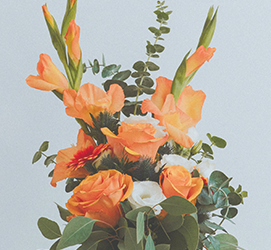
Common problems with wedding flowers for Malden Rushett venues
Posted on 03/10/2026
Wedding flowers should feel effortless on the day. In reality, they can become one of the trickier parts of planning, especially when you're working with Malden Rushett venues that may have tight access, variable room sizes, awkward ceremony times, or very specific setup windows. The common problems with wedding flowers for Malden Rushett venues are usually not about the flowers themselves being "wrong"; they're about timing, temperature, venue rules, transport, and simple communication gaps. Get those bits right and everything feels calmer. Miss them, and even a beautiful bouquet can arrive looking tired, out of place, or last-minute.
This guide breaks down the practical issues couples run into, why they happen, and how to avoid them without overcomplicating things. You'll find a step-by-step planning approach, a comparison table, a checklist, and a realistic example from the kind of situation that happens more often than people admit. Let's face it, weddings have enough moving parts already.
Table of Contents
- Why these flower problems matter
- How wedding flowers work at Malden Rushett venues
- Key benefits of getting the flowers plan right
- Who this is for and when it makes sense
- Step-by-step guidance
- Expert tips for better results
- Common mistakes to avoid
- Tools, resources and recommendations
- Law, compliance, standards, or best practice
- Options, methods, or comparison table
- Case study or real-world example
- Practical checklist
- Conclusion
- Frequently asked questions
Why Common problems with wedding flowers for Malden Rushett venues Matters
Flowers are not just decoration. They affect first impressions, photographs, the mood of the ceremony, and the visual link between outfits, table styling, and the venue itself. In a place like Malden Rushett, where weddings may be held in village halls, country-style venues, private homes, marquees, pubs with event space, or smaller local settings, the flower plan has to work with the space rather than fight it.
That matters because floral issues tend to show up at exactly the wrong time. A bouquet wilting before the confetti moment. Buttonholes not pinning properly. Table arrangements blocking guest sightlines. A registrar table that suddenly looks much smaller than expected. These are all ordinary, solvable issues, but only if they're spotted early.
There is also the emotional side, which people don't always say out loud. Wedding flowers often carry a lot of meaning: the favourite rose of a parent, a colour tied to the couple's story, a tribute to a family member, or simply a look that makes the room feel like your day. When the flowers don't match the venue or don't survive the day, it can feel oddly disappointing. A bit unfair, really. And completely avoidable in many cases.
For local couples, the key challenge is that Malden Rushett venues can vary a lot in layout and conditions. One space might be airy and bright with no storage, another may be warmer than expected in summer, and another may have a strict setup window because events are booked back-to-back. That means floral success is less about choosing the "prettiest" option and more about choosing the right flower solution for the location.
Expert summary: the biggest wedding flower problems are usually practical, not aesthetic. Temperature, timing, access, table sizes, and venue rules matter more than most couples expect.
How Common problems with wedding flowers for Malden Rushett venues Works
To understand the common problems, it helps to see how wedding flowers move through the process. A bouquet or centrepiece isn't just picked from a photo and dropped off. It has to be designed, conditioned, transported, delivered, placed, and sometimes adjusted on site. Each step introduces a small risk.
In practice, the flower process usually runs like this: you choose styles and colours, agree quantities, confirm the venue and timings, and then the florist prepares the arrangements close to the wedding date. On the day, the flowers travel to the venue and are handed over or installed. Simple enough on paper. In the real world, the tiniest detail can cause trouble. A narrow delivery entrance, a late supplier arrival, or a venue that won't allow early access can throw the whole rhythm off.
Most floral problems fall into a few main buckets:
- Timing problems: flowers arrive too early, too late, or before the venue is ready.
- Condition problems: blooms weaken in heat, dry out in transit, or bruise on the way.
- Space problems: arrangements are too large, too small, or not suited to the room.
- Style problems: the flowers clash with the venue or don't photograph well in the available light.
- Communication problems: the florist, couple, and venue team each have slightly different expectations.
Malden Rushett venues may also have practical quirks that are easy to overlook. Parking may be limited. Deliveries may need to be coordinated with other suppliers. Rooms may change between ceremony and reception use. And if your wedding is in summer, even a short wait in a warm car can soften delicate stems before the guests have even arrived. Truth be told, flowers are a bit fussy. That's just how they are.
This is why experienced planning matters. Good wedding flowers aren't only about choosing a palette. They're about making sure the design survives the journey and still looks polished when the photographer starts working through the group shots.
Key Benefits and Practical Advantages
When the flower plan is handled properly, the benefits go far beyond "looking nice." You get a smoother wedding day, less stress, and a venue that feels coordinated rather than pieced together at the last minute.
1. Better visual flow
Well-planned flowers help tie together dresses, suits, ceremony decor, tables, and photo backdrops. That's especially useful in venues where the room itself is neutral or a little uneven in character. Flowers can do the heavy lifting, so to speak.
2. Less last-minute panic
Most wedding-day floral stress comes from avoidable surprises. The right plan reduces the chance of frantic rearranging when the florist arrives and discovers the tables are smaller than expected. Nobody wants that energy before the ceremony.
3. Better durability through the day
Some arrangements hold up better than others. Choosing suitable blooms, stems, and mechanics for the venue conditions means the bouquets still look fresh during speeches, photographs, and the evening reception.
4. Smarter use of budget
Flowers can become expensive quickly if you keep correcting problems. Picking arrangements that work for the venue from the start usually gives better value than trying to "fix" unsuitable designs later.
5. Easier setup for the venue team
Venues appreciate clear instructions and sensible designs. If arrangements are easy to place, stable, and sized correctly, setup moves faster and there's less chance of accidental damage.
A good result is calm, not flashy. That calm is a benefit in itself.
Who This Is For and When It Makes Sense
This topic matters most if you're planning a wedding in Malden Rushett or nearby and you want the flowers to feel elegant without becoming another headache. It's especially useful for couples who are juggling multiple suppliers, a short planning lead time, or a venue that does not provide much practical guidance.
You'll find it helpful if:
- you're marrying at a venue with limited access or strict setup times
- you want the flowers to match a specific theme, season, or colour palette
- you're using fresh flowers and need them to last through a long day
- you're unsure how many arrangements you actually need
- you want the ceremony and reception flowers to work together without waste
- you're comparing options such as bouquets only, full table styling, or a full flower package
It also makes sense if you're the practical one in the couple and you've realised that "we'll sort it later" is not a strategy. Fair enough. Flowers are one of those things that can look simple until they are suddenly not simple at all.
Families helping with the planning often need this too, particularly when the wedding is being organised from a distance or around work schedules. And if your venue is a bit more informal, a barn-style room or a converted space, the floral choices usually need a bit more thought than people expect.
Step-by-Step Guidance
If you want to avoid the common problems with wedding flowers for Malden Rushett venues, follow a process rather than picking items one by one. Here's a practical route that works well.
Step 1: Confirm the venue conditions
Ask about access, delivery times, table sizes, ceremony layout, and any restrictions on candles, stands, hanging displays, or floor pieces. You do not need a huge list, but you do need the basics. A single unanswered question can lead to a flower arrangement that simply doesn't fit.
Step 2: Decide what the flowers must do
Are they mainly for the ceremony? The photographs? The tables? Do you want one large focal arrangement or a collection of smaller pieces? Once you know the job, the design decisions become easier. There's a world of difference between "pretty flowers" and "flowers that have a purpose."
Step 3: Match design to season and venue temperature
Delicate blooms can struggle in warmth or under bright direct light. If your venue has sunny windows, late-afternoon heat, or a marquee-style setting, ask for flowers that tolerate those conditions better. This is where local experience really helps.
Step 4: Build the order around the actual guest flow
Think about what guests see first, where they sit, and what gets photographed. A low table arrangement may be better than a tall one if people need to talk across tables. Likewise, if the ceremony room is small, a few carefully placed focal pieces can feel better than lots of scattered items.
Step 5: Confirm quantities and duplicates
Count bouquets, buttonholes, corsages, aisle pieces, table arrangements, and any flower petals or extras. Then check the numbers again. Weddings have a funny way of revealing missing details five minutes before the first picture. Not ideal.
Step 6: Set out delivery and setup instructions clearly
Give the florist the venue contact details, arrival window, and any access notes. If there's no easy unloading point or the car park is a bit of a trek, say so. Clear instructions make a bigger difference than people realise.
Step 7: Plan for the handover on the day
Decide who receives the flowers, where they are placed, and what happens if someone is not immediately available. A simple named contact list can stop a lot of confusion.
Step 8: Review care on the morning
Keep bouquets cool and shaded if possible, and avoid placing them near radiators, direct sun, or anything that warms the stems too quickly. If you're using a local florist such as a florist in Malden Rushett KT9, ask for any specific care notes in writing or by message so they're easy to follow on the day.
Expert Tips for Better Results
These are the sorts of small decisions that make a real difference. They're not glamorous, but they work.
- Choose sturdier focal flowers for long days. Roses, alstroemeria, carnations, chrysanthemums, and some orchids often hold shape better than more delicate stems in busy settings.
- Use one consistent colour family. If the venue already has strong decor, too many competing shades can make the room feel restless rather than elegant.
- Check the photograph backdrop. A bouquet that looks perfect in person can disappear against a patterned wall or dark wood paneling.
- Keep buttonholes simple. In a lively wedding, tiny details get bumped, hugged, and pinned several times. A neat, secure design usually wins.
- Ask for flexibility in the design. Florists can often substitute blooms while keeping the style and tone intact. That matters if a specific flower is unavailable.
- Think about where the flowers sit during the day. A bouquet left in the sun on a windowsill is not going to thank you.
One small but useful tip: if the venue room changes from ceremony to dinner service, ask how long the flowers will be in each space. Some arrangements are best designed for a quick ceremony and a longer reception display. Others need to look good from morning to midnight, and that's a different brief altogether.
To be fair, wedding flowers are one of those areas where a slightly less ambitious plan often performs better than an overworked one.
Common Mistakes to Avoid
Here's where most avoidable flower problems start.
Choosing flowers before checking the venue
It sounds harmless, but it often causes trouble. A grand arrangement may be lovely on paper and completely wrong for a small venue table or a low-ceilinged room.
Forgetting about heat and travel time
Flowers can wilt, bruise, or open too quickly if they spend too long in transit or in a warm space. Even a short journey matters if the flowers are sensitive.
Not accounting for setup constraints
Some venues allow only a short delivery window, which means the florist needs a fast and clean handover. If you don't factor that in, the schedule can become tight very quickly.
Ordering too many decorative pieces
More is not always better. Lots of small arrangements can look cluttered, and they also create more things to move, store, and pay for. Simplicity often photographs better.
Ignoring table dimensions
This one is surprisingly common. An arrangement that looks right in a showroom might overpower a narrow round table, or sit awkwardly between plates and glasses.
Not assigning a flower contact on the day
If the florist needs a quick answer and no one knows who's in charge, delays happen. A single named contact saves time and confusion.
Expecting every flower to be identical
Fresh flowers are natural, which means small differences are normal. Minor variation is part of the charm. The problem is only when people expect machine-like uniformity from something grown in the real world.
Tools, Resources and Recommendations
You do not need a complicated toolkit, but you do need a few practical resources.
- Venue floor plan or rough sketch: useful for judging table sizes, focal points, and aisle width.
- Phone photos of the venue: especially helpful if you're planning from a distance or the room has recently changed layout.
- Colour references: fabric swatches, dress photos, or a simple mood board can help with coordination.
- Timings sheet: one page showing delivery, ceremony, photos, and reception transitions keeps everyone aligned.
- Flower care guidance: ask your florist for practical instructions on water, shade, and handling.
For couples exploring styles and product types, browsing a dedicated wedding flowers collection for Malden Rushett can help you compare bridal bouquets, bridesmaid bouquets, buttonholes, and table arrangements in one place. If you're still deciding on the overall look, the weddings range is also a useful starting point because it shows how the different pieces can work together.
If your budget is under pressure, don't panic. You can often create a strong effect with a few well-placed arrangements rather than trying to decorate every surface. That's usually the smarter move anyway.
Law, Compliance, Standards, or Best Practice
Wedding flowers are not usually a heavily regulated subject, but best practice still matters. Venues, florists, and couples all have duties of care in a practical sense: safe access, clear delivery instructions, sensible handling, and respectful use of the space.
In the UK, the most relevant considerations are usually straightforward:
- Venue rules: some sites limit flames, adhesives, freestanding structures, or floor items to protect surfaces and guests.
- Access and safety: delivery routes should be clear so arrangements can be moved without damage or trip hazards.
- Supplier communication: if a florist is delivering to a venue, the handover should be clear enough to avoid confusion.
- Consumer expectations: if a product or service is described in a certain way, it should broadly match that description, with normal seasonal variation understood.
- Refund and replacement policy awareness: if something is damaged or not as expected, it helps to know the florist's policy in advance. The wording matters, and reading it before the wedding is a very good idea.
It's also sensible to confirm any insurance or access requirements with the venue. Not every room needs a formal process, but bigger installations or complex setups may need more careful coordination. No drama, just sensible planning.
For many couples, the most important "standard" is simply this: keep the flowers safe, the setup clean, and the expectations realistic. That covers a surprising amount.
Options, Methods, or Comparison Table
Different venues and budgets call for different floral methods. Here's a simple comparison to help you think it through.
| Option | Best for | Pros | Potential drawbacks |
|---|---|---|---|
| Bridal bouquet only | Small weddings, registry-style ceremonies, minimal styling | Simple, lower upkeep, easy to transport | Limited visual impact across the venue |
| Bouquets plus buttonholes | Traditional ceremonies and family photos | Looks coordinated without too much complexity | Still may need venue decor to finish the room |
| Full ceremony and reception styling | Larger celebrations, photo-led weddings | Strong visual theme, polished finish | More planning, higher budget, more setup detail |
| Mixed focal arrangements | Venues with a few key display points | Good balance of impact and practicality | Requires careful placement to avoid clutter |
| Seasonal, florist-led choice | Couples who want flexibility and freshness | Often better value and better stem quality | Less control over exact flower types |
If you're unsure which route to choose, the florist-led option is often the least stressful. You give the style, colour mood, and budget, and let the florist select suitable stems. That tends to work well when availability changes or when the venue conditions are a bit unpredictable.
Case Study or Real-World Example
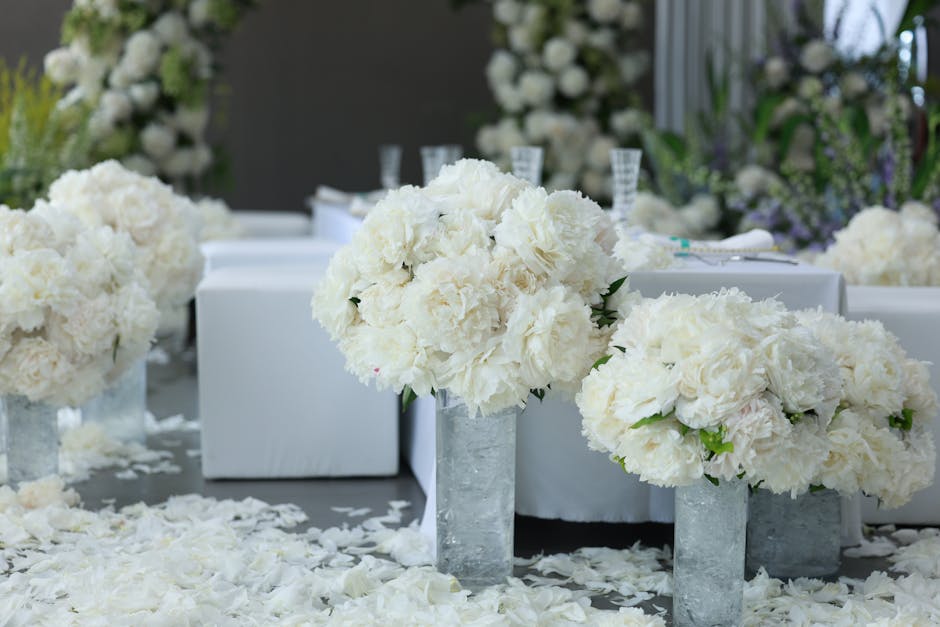
Here's a realistic example from a typical local planning scenario. A couple books a small Malden Rushett venue for late spring. They want white and soft pink flowers, a bridal bouquet, four buttonholes, and a few centrepieces. Simple enough. But the room is brighter than they expected, the ceremony table is smaller than the photos made it look, and the reception tables are set quite close together.
At first, they planned tall centrepieces and lots of extra flowers along the aisle. Once the room layout was checked properly, it became clear those arrangements would crowd the space and make movement awkward. Instead, they switched to lower table pieces, a more compact bouquet, and two stronger focal arrangements near the entrance and registrar area.
The change did three things. It made the room feel calmer. It improved sightlines for guests. And it reduced the risk of flowers getting knocked over during the drinks reception, which, in fairness, is always one of the more lively parts of the day.
What did they learn? That the venue layout mattered more than the original inspiration board. The flowers still looked elegant, but now they worked with the space instead of asking the space to behave differently. That's the sweet spot.
Practical Checklist
Use this before you finalise anything:
- Confirm the exact venue name and address
- Check access, parking, and delivery timing
- Measure or photograph tables and key display areas
- Decide which flowers are essential and which are optional
- Confirm bridal bouquet, bridesmaid bouquets, buttonholes, and table pieces
- Ask how flowers will be conditioned and transported
- Share your colour palette and style references
- Confirm what happens if a flower type is unavailable
- Nominate one wedding-day contact for the florist
- Review care instructions for keeping flowers fresh
- Check the florist's replacement or refund terms
- Make sure the final plan suits the venue room, not just the mood board
If you can tick all of those off, you're already ahead of many couples. Honestly, that's half the battle.
Conclusion
The common problems with wedding flowers for Malden Rushett venues usually come down to practical details: access, timing, room layout, heat, and communication. None of that is glamorous, but all of it matters. The good news is that these problems are manageable when you plan the flowers around the venue rather than treating the venue as an afterthought.
If you take one thing from this guide, let it be this: the best wedding flowers are the ones that still look beautiful once they've travelled, been placed, and lived through the day. That's the real test. Choose sensible stems, give clear instructions, and keep one eye on the actual room, not just the photo inspiration. Do that, and your flowers will feel like part of the celebration rather than a source of stress.
Get a free quote today and see how much you can save.
And when the day arrives, with the light softening through the windows and the room finally coming together, you'll be glad you handled the details properly.
Frequently Asked Questions
What are the most common problems with wedding flowers for Malden Rushett venues?
The most common issues are poor timing, flowers arriving in weak condition, arrangements that are too large for the space, and venue access problems. In many cases, the flowers themselves are fine; it's the logistics around them that cause trouble.
How far in advance should wedding flowers be arranged?
It's sensible to begin planning early, especially if you want specific flowers or a coordinated design for ceremony and reception. Final details are usually confirmed closer to the date so the florist can work with seasonal availability.
Do venue size and layout really affect flower choice?
Yes, very much so. A small room needs different arrangements from a large hall or marquee. Table size, lighting, and guest movement all influence what will look good and what will simply get in the way.
What flowers last best through a long wedding day?
Hardier blooms often perform well, especially when the weather is warm or the day is busy. A florist can advise on stems that suit the season and the venue conditions. The safest answer is often a mix of style and resilience.
Can I use the same flowers for the ceremony and reception?
Yes, and many couples do. It works best when the arrangements are easy to move and the reception space can comfortably take them. Some designs are better split across both spaces rather than duplicated exactly.
What if my venue has limited access or parking?
Tell the florist as early as possible. Limited access can affect delivery time, unloading, and the type of setup that is realistic. A good florist will plan around that rather than trying to force a one-size-fits-all approach.
Are artificial flowers a good idea for venue weddings?
They can be, depending on the look you want and the venue conditions. They're sometimes useful where durability is the priority, but many couples still prefer fresh flowers for their scent, texture, and natural finish.
How do I stop flowers clashing with the venue decor?
Use the room as part of the design brief. Share photos of the space, include your colour palette, and ask the florist to suggest tones that complement rather than compete with the surroundings.
What should I ask the florist before booking wedding flowers?
Ask about delivery timing, what happens if flowers are unavailable, how the arrangements are transported, care instructions, and whether they have experience with similar local venues. Those questions are more useful than just asking for the price alone.
Can wedding flowers be delivered on the same day in Malden Rushett?
Sometimes yes, depending on the florist's schedule and the order requirements. Same-day delivery is more common for simpler arrangements than for full wedding installs, which usually need more careful planning.
How can I keep bouquets fresh before the ceremony?
Keep them cool, out of direct sunlight, and away from heat sources. If possible, store them in water or follow the florist's specific care instructions. Simple steps make a noticeable difference.
Do I need a florist who knows local venues?
It helps. Someone familiar with local venue layouts, access points, and setup quirks is more likely to spot problems early. That said, a careful florist who asks the right questions can still do an excellent job.
For couples comparing flower styles, budget options, and wedding-ready arrangements, it can also help to explore flower delivery in Malden Rushett KT9 alongside your wedding-specific choices, especially if you want a broader sense of what the florist can supply. If you're planning the full day, from bridal bouquet to table pieces, the wider best flower delivery page can be a useful extra reference too.
What is the biggest mistake couples make with wedding flowers?
The biggest mistake is designing the flowers before checking how the venue actually works. Once access, room size, and timing are clear, everything becomes much easier and the result usually looks better as well.